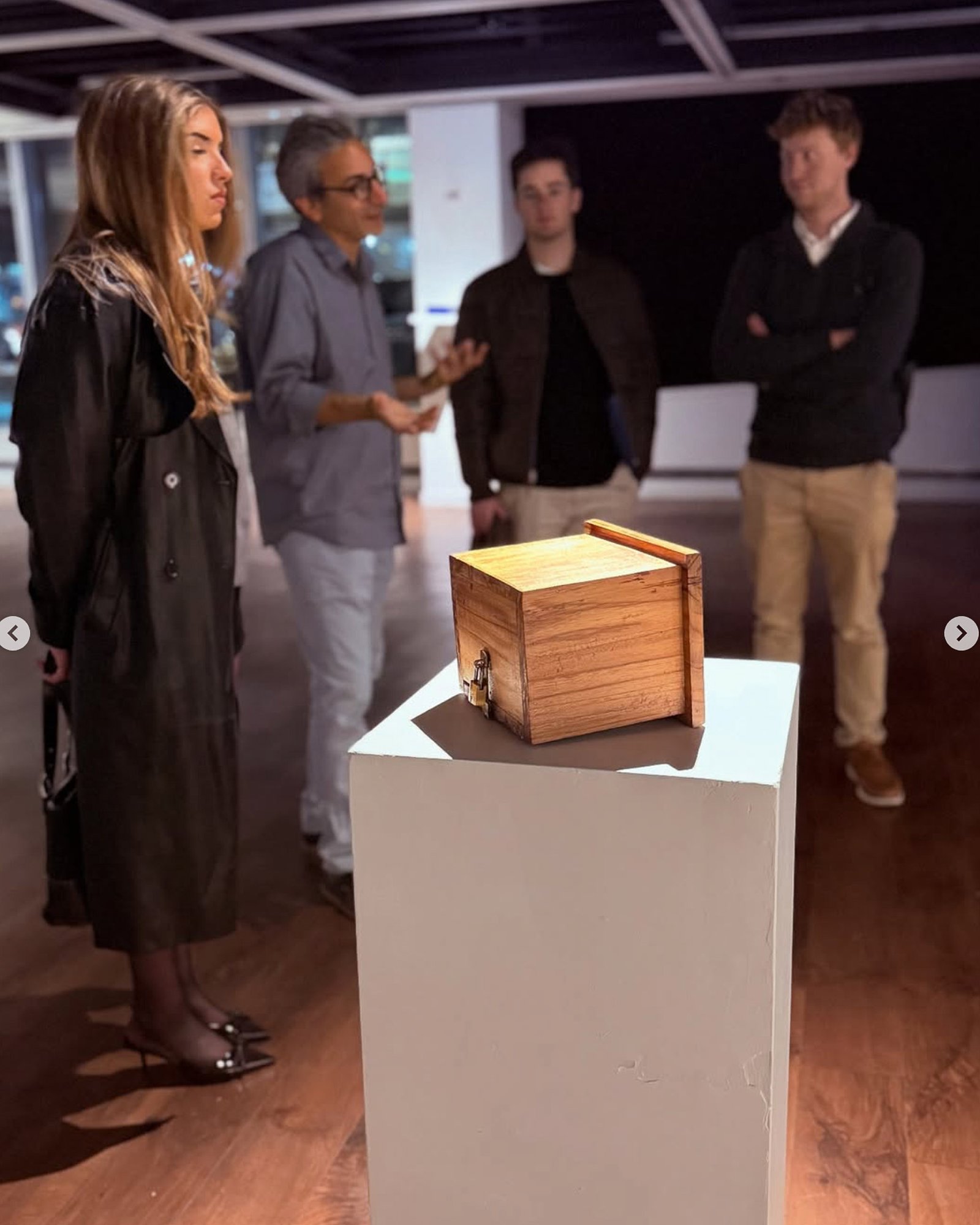
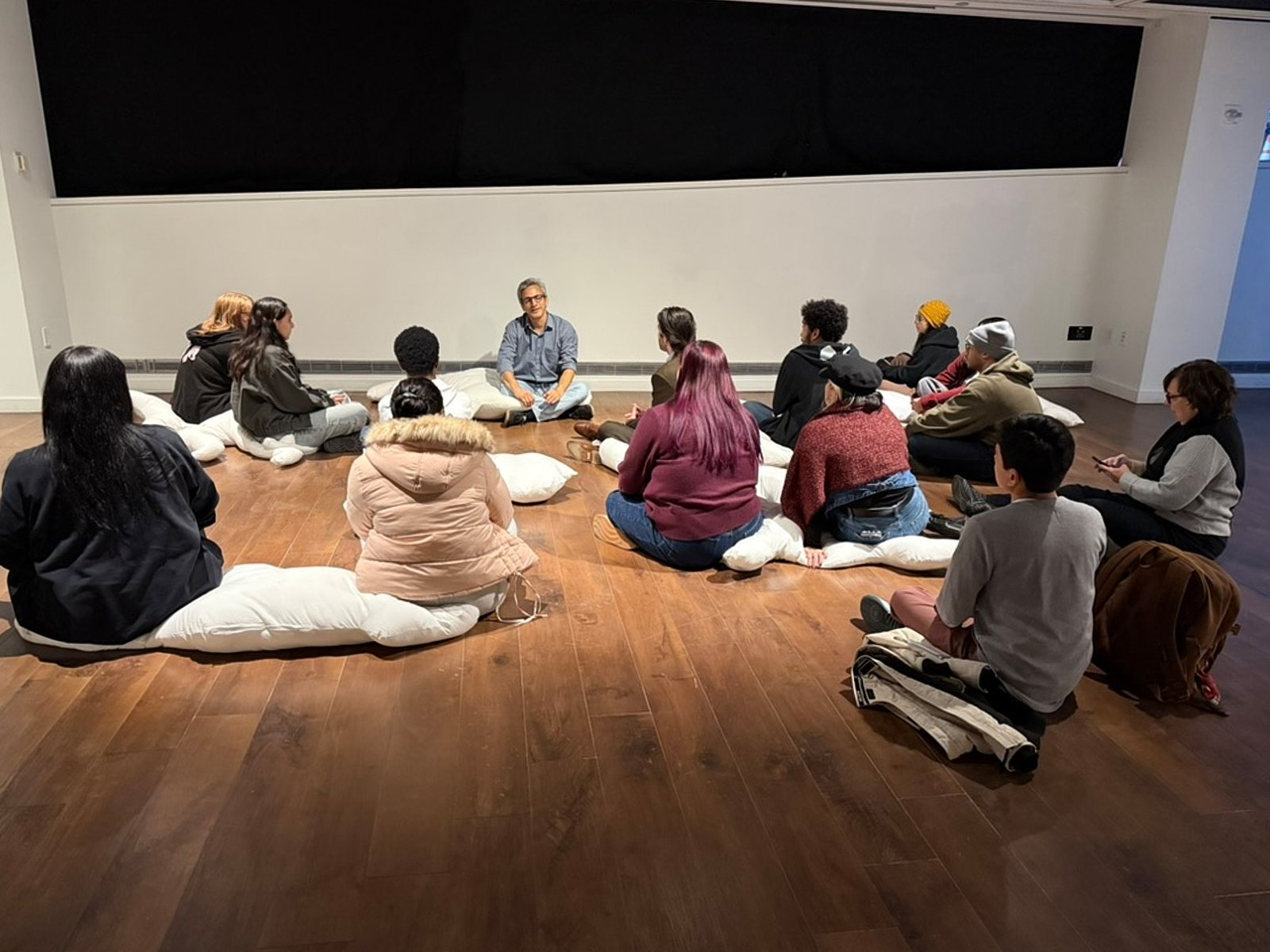
Located in a Law college that trains the NYPD and LAPD, On Absence talks about the political implications of absence itself as a framework in the American landscape. It brings themes specific to the South Asian experience, including the politics of caste, the legacies of colonialism and decoloniality, the intergenerational impact of partition, and pervasive histories of communal violence.
Three works- Khicch, This camera contains the only image of Kalki and See you were commissioned for the show in 2025.
See You
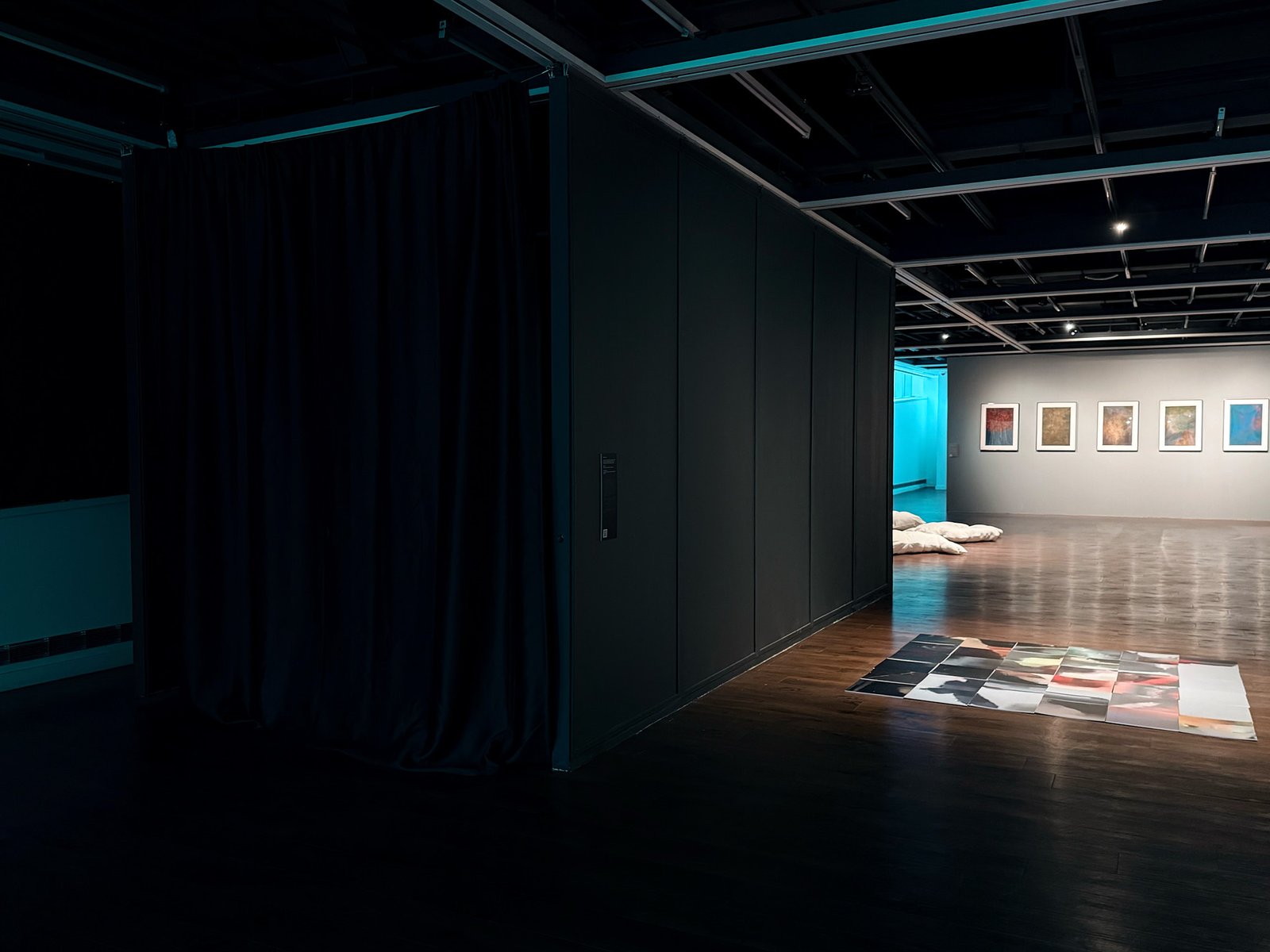
See You, a multi-media installation using Ardunio, proximity sensors and digital photography.
In the closed, black room- A small image of a tree, with nodes like eyes, invisible from the distance invites you to take a closer look. As you try to get closer, the image disappears. Here, the tree as witness sees the participant than vice versa- flipping agency. The work talks about discourses of distance, access, and violence, destabilising the subject-voyeur relationship.
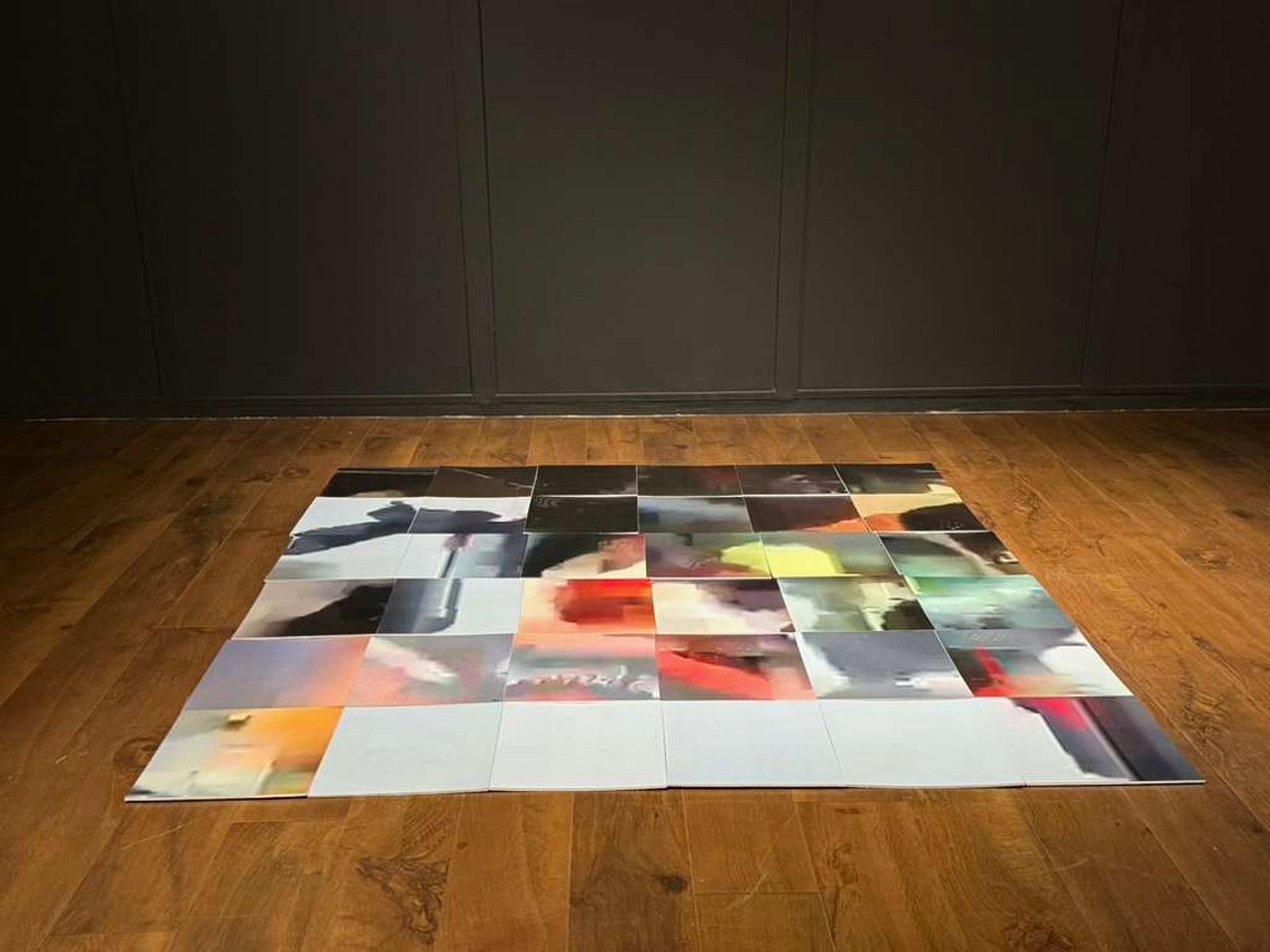
Khicch
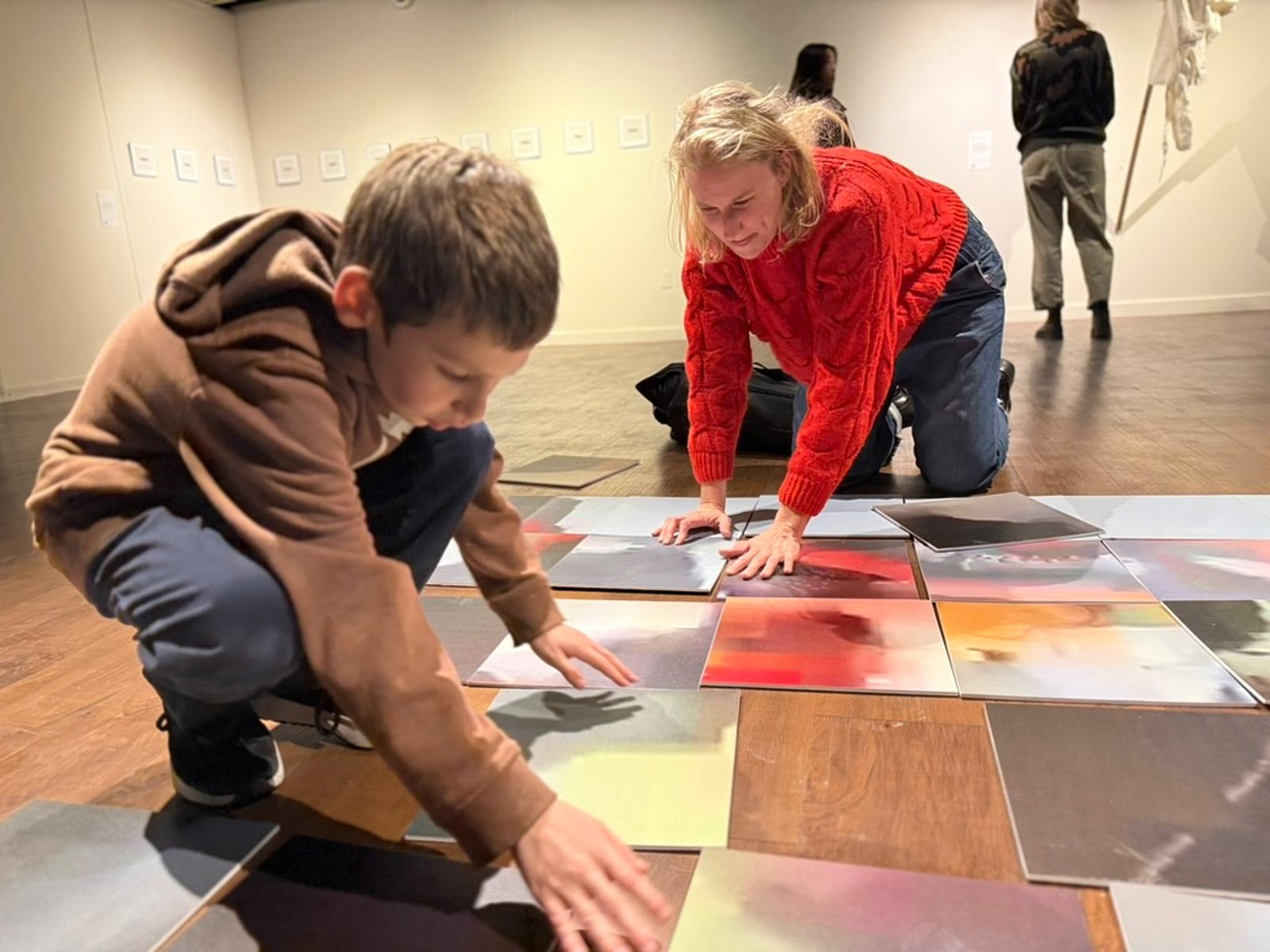
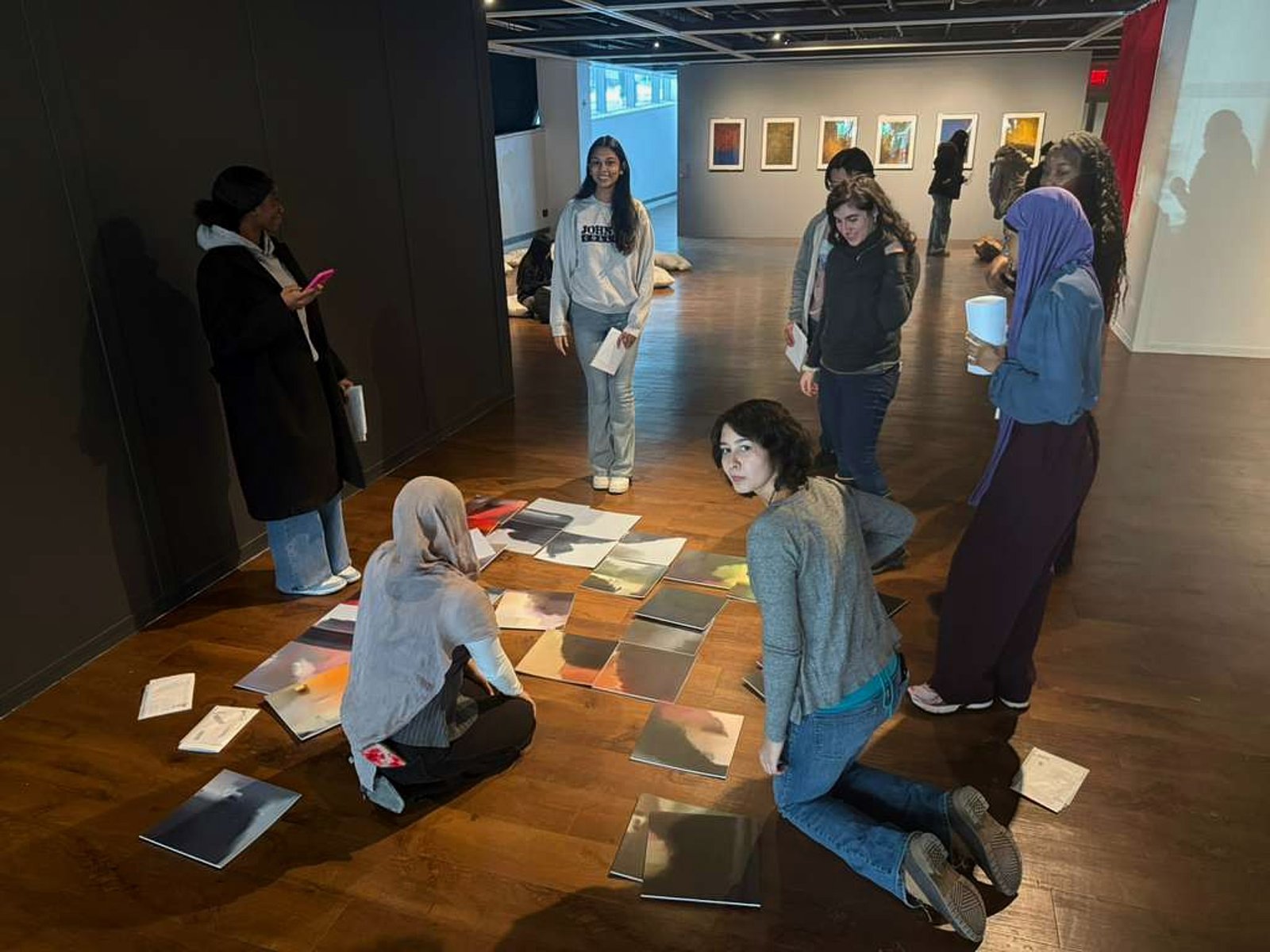
Khicch is an interactive puzzle, 6x6 feet total divided into 12x12 inches blocks. The image is from an incident during the farmers protest in New Delhi (2022); where the son of a powerful politician drove his SUV through peacefully protesting farmers, killing them. Due to it’s heavy circulation, the loss of resolution generates a hazy image, thus never being ‘complete’ or coherent when the viewer-participant engages with the work.
The work indicates the inability of the image to hold ‘completeness and coherency’, while also attempting to slow it down for registration. “Khichh” in punjabi means stretch- which is material, historical and affective at the same time.
This Camera Contains the Only Image of Kalki
This camera contains the only image of Kalki is a pinhole camera, which contains an unfixed, exposed pinhole image of Kalki inside. Kalki, is the last avatar of Vishnu yet to come, the messiah in Hindu mythology. Kalki in hindi means both of past, and tommorow- thus becoming a being dangling in time.
Building further on Schrödinger and Piero Manzoni’s shit can, the work invites the viewer to see the image, which they can never see; an intersection of past and future which remain inaccessible.